

How to Comfort Someone Over Text: 75+ Caring Messages

Need a comforting text, kind reply, or gentle message for someone going through a hard time? Sometimes words feel small when someone you care about feels broken, stressed, disappointed, or close to tears.
You want to help, but you do not want to sound fake. You want to say something meaningful, not send a cold “stay strong” and disappear. One small text can feel like a hand on someone’s shoulder when life feels heavy.
Comforting someone over text does not mean fixing every problem. Most people are not waiting for a perfect solution. They want to feel heard. They want to know someone cares enough to stay, even from behind a screen.
A good comfort message should feel soft, honest, and safe. No pressure. No judgment. No big speech. Just warm words that say, “You are not alone in this.”
Read More: Someone Is Going Through a Hard Time | Make him feel comfortable with these messages.
What to Text When Someone Needs Comfort
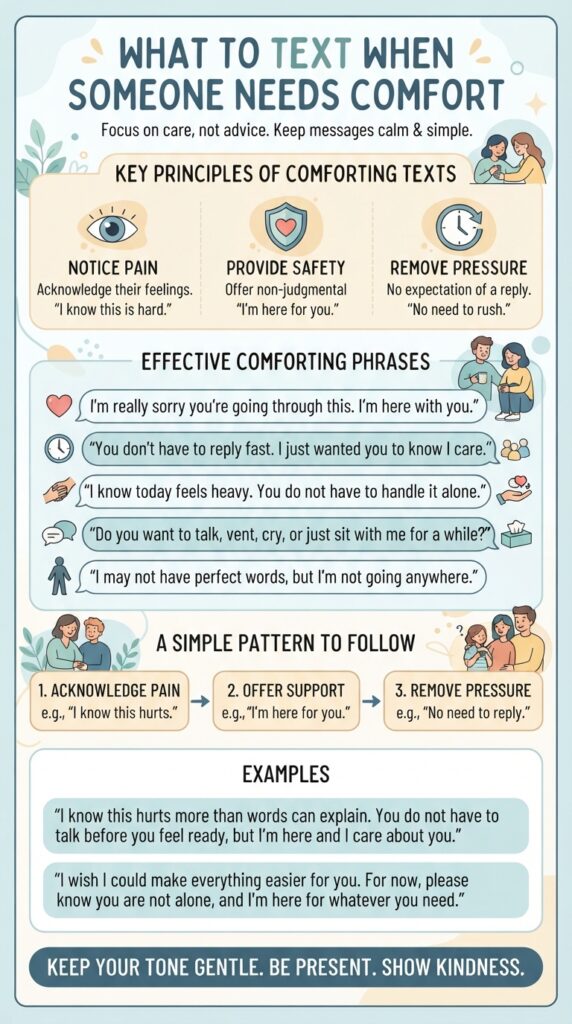
When someone needs comfort, start with care before advice. A simple message works better than a long lecture. People in pain usually do not need perfect words. They need calm words.
You can say something like:
• “I’m really sorry you’re going through this. I’m here with you.”
• “You don’t have to reply fast. I just wanted you to know I care.”
• “I know today feels heavy. You do not have to handle it alone.”
• “Do you want to talk, vent, cry, or just sit with me for a while?”
• “I may not have perfect words, but I’m not going anywhere.”
Best comforting texts usually do three things: they notice someone’s pain, give emotional safety, and leave room for honest feelings. Avoid rushing them. Avoid turning pain into a lesson and control your mind. Sometimes “I’m here” can do more than a hundred clever lines.
A strong comfort text can follow a simple pattern:
• Acknowledge pain: “I know this hurts.”
• Offer support: “I’m here for you.”
• Remove pressure: “You do not have to reply right now.”
For example:
• “I know this hurts more than words can explain. You do not have to talk before you feel ready, but I’m here and I care about you.”
Or:
• “I wish I could make everything easier for you. For now, please know you are not alone, and I’m here for whatever you need.”
Keep your tone gentle. Write like you would speak to someone sitting beside you. No fancy words needed. Just kindness with a pulse.
How to Comfort Someone Over Text Without Sounding Awkward
Comforting someone by text can feel awkward because you cannot hug them, see their face, or hear their voice. One wrong line can sound too cold, too dramatic, or too forced. So keep it real. Write like a caring person, not like a quote page.
Start soft. Do not jump straight into advice. When someone feels sad, hurt, anxious, or overwhelmed, advice can feel like noise. First, let them feel understood.
You can send:
• “I’m really sorry. I know words may not fix anything, but I’m here.”
• “That sounds painful. I hate that you have to deal with all of this.”
• “I do not want to say anything wrong, but I care about you and I’m listening.”
• “You do not need to explain everything perfectly. Just say whatever you can.”
Awkward comfort usually happens when people try too hard. They send long speeches, motivational quotes, or quick fixes when someone only wanted emotional support. A better way? Match their mood.
If they sound broken, be gentle.
If they sound angry, let them vent.
If they sound numb, do not push.
If they sound scared, stay calm.
A helpful comfort text can feel like a quiet room, not a crowded stage.
Ask Before Giving Advice
Many people do not want solutions right away. They want someone to listen without turning pain into a project. Before giving advice, ask what they need from you.
Try:
• “Do you want advice, or do you just want me to listen?”
• “Would it help to talk through it, or would a distraction feel better?”
• “Do you want comfort right now, or do you want help figuring out what to do next?”
• “Should I call you, keep texting, or give you some quiet space?”
This small question can save you from sounding pushy. It also gives them control when life already feels out of control.
Do Not Make Their Pain About You
It may feel natural to say, “I know exactly how you feel,” but sometimes that can make someone feel unseen. Even if you went through something similar, their pain still belongs to them.
Better replies:
• “I cannot fully know how heavy this feels for you, but I’m here.”
• “I remember going through something painful too, but right now I want to listen to you.”
• “Your feelings make sense. You have every right to feel this way.”
• “You do not have to compare your pain with anyone else’s.”
Comfort works best when attention stays on them. Let your message say, “Your feelings matter here.”
Keep Your Text Warm, Not Perfect
Do not overthink every word. A slightly imperfect message with real care feels better than a perfect line with no heart.
You can say:
• “I do not know perfect words, but I care about you so much.”
• “I wish I could sit beside you right now.”
• “I’m here. No pressure. No judgment.”
• “You can cry, rant, repeat yourself, or say nothing. I’m still here.”
A comforting reply does not need fancy language. It needs patience. Like people say, “A kind word never broke anyone.” Sometimes one gentle sentence can stay with someone longer than you think.
Comforting Text Messages You Can Send Right Now
When someone feels low, they may not need a perfect paragraph. A few honest words can land softer. Think of your text like a warm blanket, not a speech.
Use one of these messages when you want to comfort someone quickly without sounding cold, fake, or too much.
Short Comforting Texts
Short messages work best when someone feels overwhelmed, tired, or too emotional to reply.
• “I’m here with you. No pressure to reply.”
• “You are not alone in this.”
• “I care about you more than you know.”
• “Take your time. I’m not going anywhere.”
• “I hate that you’re hurting.”
• “You matter, even on hard days.”
• “One step, one breath, one moment.”
• “I’m holding space for you right now.”
• “You can lean on me today.”
• “I wish I could make it lighter.”
Gentle Comforting Texts
Gentle texts help when someone feels fragile, sad, anxious, or close to tears. Keep your words soft. No pressure. No forced positivity.
• “I know everything feels heavy right now. You do not need to carry it alone.”
• “You can feel however you feel. I’m not here to judge.”
• “Nothing about your pain sounds silly to me.”
• “You do not need to explain every detail. I believe you.”
• “Rest your heart for a little while. I’m here.”
• “I wish I could sit beside you and make tonight easier.”
• “You have been strong for so long. It’s okay to feel tired.”
• “No need to pretend with me. Say what hurts.”
Deep Comforting Texts
Use deeper messages for someone going through heartbreak, grief, failure, anxiety, family problems, or a painful life moment.
• “I know I cannot fix what happened, but I can stay beside you while you move through it.”
• “Your pain matters. Your feelings matter. You do not have to make everything look fine for me.”
• “Some days break us open in ways we cannot explain. Please be gentle with yourself tonight.”
• “You are allowed to fall apart for a moment. Falling apart does not mean failing.”
• “I may not know every right word, but my heart feels heavy knowing you are hurting.”
• “You do not have to be strong every second. Even brave people need soft places to land.”
• “I know life feels unfair right now. I will not rush you, judge you, or leave you alone with it.”
• “Whatever you are feeling right now, I can handle it. You do not have to hide your pain from me.”
Sweet Comforting Texts
Sweet comfort works well for close friends, partners, siblings, or anyone who needs warmth more than advice.
• “I wish I could send you a hug through my phone.”
• “Your heart deserves peace after everything you’ve been carrying.”
• “I’m proud of you for making it through today.”
• “You are loved, even when your mind tells you otherwise.”
• “I hope tonight feels softer than your day.”
• “I’m sending you all my love, patience, and quiet comfort.”
• “Your sadness does not scare me away.”
• “You do not have to smile for me. Just breathe.”
Supportive Texts When You Do Not Know What To Say
Sometimes you care deeply, but words freeze. That happens. Honest uncertainty can still feel comforting when it comes with love.
• “I do not know perfect words, but I care about you.”
• “I’m scared of saying wrong things, but I do not want to stay silent.”
• “I may not fully understand, but I want to understand.”
• “I do not have answers, but I have time for you.”
• “I’m here to listen, even if words come out messy.”
• “No perfect reply needed from you. I just wanted to check on your heart.”
• “I’m not going to pretend I can fix everything, but I can stay.”
• “I care. That’s all I really know how to say right now.”
A comforting text does not need to shine like poetry. It only needs to feel safe. When words come from care, people can usually feel it.
What to Say When Someone Is Sad Over Text
When someone feels sad, do not rush to brighten their mood. Sadness does not always need fixing. Sometimes it needs company.
A comforting text should give them room to feel low without feeling weak. Do not force “be positive” energy too early. A heavy heart cannot always jump straight into hope.
Start with simple, caring words:
• “I’m sorry today feels so hard. I’m here with you.”
• “You do not need to hide your sadness from me.”
• “I know you may not feel okay right now, and that’s completely valid.”
• “You can talk, cry, or stay quiet. I’ll still be here.”
• “I wish your heart felt lighter today.”
Sad people often feel like a burden. Your message should quietly tell them, “You are not too much for me.” That alone can bring comfort.
When They Say “I’m Just Sad”
If someone says, “I’m just sad,” do not treat it like a small thing. “Just sad” can carry a whole storm behind it.
You can reply:
• “I hear you. Sad days can feel so heavy, even without one clear reason.”
• “You do not have to explain why. I’m here either way.”
• “I’m sorry your heart feels low today. Want to talk about it?”
• “No need to make sense of every feeling right now. Just breathe.”
• “I’m with you. We can take today slowly.”
Short replies often work better here. When someone feels emotionally tired, long texts can feel like homework.
When They Feel Alone
Loneliness can make sadness louder. A small message can remind someone they still matter to somebody.
Send:
• “You may feel alone right now, but you are not alone with me.”
• “I’m here, even if I’m not physically beside you.”
• “Your feelings matter to me. You matter to me.”
• “I know loneliness can lie loudly. Please remember, I care.”
• “You do not have to face tonight by yourself.”
Avoid saying, “You have so many people around you.” Even when true, it can sound dismissive. Feeling alone and being alone are not always same thing.
When They Do Not Want To Talk
Some people shut down when sadness feels too much. Do not chase them with too many questions. Leave a soft door open.
You can say:
• “You do not have to talk right now. I just wanted you to know I care.”
• “I’ll give you space, but I’m close if you need me.”
• “No reply needed. Just sending you a little comfort.”
• “I’ll check on you later. You do not have to carry everything alone.”
• “Take your time. I’m not upset if you need quiet.”
Comfort sometimes means staying gentle without demanding access to someone’s pain.
When You Want To Make Them Feel Better
Trying to make someone feel better does not mean forcing happiness. It means helping them feel less alone, less judged, and less trapped inside their own thoughts.
Try messages like:
• “One bad day does not erase every good thing about you.”
• “You have survived hard moments before. I believe in you, even now.”
• “Today may feel heavy, but you do not have to solve your whole life tonight.”
• “Rest first. Answers can wait.”
• “Your heart deserves patience, not pressure.”
A sad person may forget their own strength for a while. Your text can gently hold that truth for them until they can hold it again.
What to Text Someone Who Is Crying
When someone cries, words should feel calm, not crowded. Do not panic. Do not rush them. Tears are not a problem you need to solve in five seconds.
A crying person may feel embarrassed, exposed, or too tired to explain. Your text should make them feel safe enough to breathe.
Send something gentle:
• “It’s okay to cry. You do not have to hold everything in.”
• “I’m here with you. Let it out.”
• “You are not weak for crying. You are human.”
• “Take your time. I’m not going anywhere.”
• “I wish I could sit beside you right now.”
A simple comfort text can do more than a long emotional speech. When tears come, less often feels kinder.
When They Cannot Explain Why They Are Crying
Sometimes tears arrive before words. Do not push for reasons. Give them space first.
You can say:
• “You do not need to explain right now. Just breathe.”
• “No pressure to make sense of it. I’m here.”
• “Your feelings do not need a perfect reason to matter.”
• “Cry first. Talk later, only when ready.”
• “I’m listening whenever words come.”
Many people feel guilty when they cannot explain their pain. Let them know comfort does not require a full report.
When They Feel Embarrassed About Crying
If someone says, “Sorry, I’m crying,” respond with kindness immediately. Do not make them feel dramatic.
Try:
• “Please do not apologize for crying.”
• “Your tears are safe with me.”
• “You never have to hide your feelings from me.”
• “Crying does not make you too much.”
• “I’m glad you trusted me enough to show how you feel.”
A soft reply can turn shame into relief. Like people say, “A burden shared feels lighter.” Even one honest cry can help someone feel less alone.
When They Are Crying Over Heartbreak
Heartbreak tears need extra care. Avoid saying, “Move on,” “forget them,” or “you deserve better” too quickly. Even true words can hurt when timing feels wrong.
Send:
• “I know your heart hurts badly right now. I’m so sorry.”
• “You loved deeply. Of course, it hurts.”
• “You do not need to be okay tonight.”
• “I’m here for every messy feeling, not only brave ones.”
• “Let tonight be about surviving, not solving everything.”
Heartbreak rarely listens to logic on day one. Comfort first. Wisdom later.
When They Are Crying From Stress
Stress can make someone break down suddenly. They may feel overloaded, tired, or ashamed because they “couldn’t handle it.”
Text them:
• “You have been carrying too much. No wonder it feels heavy.”
• “One breath at a time. You do not need to fix everything tonight.”
• “Let’s slow things down together.”
• “Tell me one thing weighing on you most right now.”
• “You are not failing. You are overwhelmed.”
A crying, stressed person may need grounding more than advice. Keep your message steady. Calm words can become an anchor.
When You Want To Help But Feel Helpless
Feeling helpless does not mean your support has no value. Your presence matters. Your patience matters. Your small text matters.
You can write:
• “I hate that I cannot take this pain away, but I can stay with you through it.”
• “I may not have answers, but I have time for you.”
• “You do not need to face this moment alone.”
• “I’m right here. Keep texting me, even if it’s only one word.”
• “We can get through the next few minutes together.”
When someone cries, do not aim for perfect comfort. Aim for steady comfort. Be calm, be kind, be there. That alone can feel like shelter in a storm.
How to Comfort Someone Who Is Stressed Over Text
Stress can make even small problems feel loud. Someone may sound irritated, quiet, emotional, or completely drained. Do not take every short reply personally. A stressed mind often has no extra space for perfect manners.
When someone feels stressed, your text should feel steady. Not bossy. Not dramatic. Not full of pressure. Think calm voice, soft landing, and one step at a time.
You can send:
• “You have a lot on your plate right now. I’m sorry it feels so heavy.”
• “Pause for one second. You do not need to solve everything at once.”
• “I’m here. Tell me what feels most overwhelming right now.”
• “You are not failing. You are carrying too much.”
• “Let’s break it down together, only if you want.”
Stress often makes people feel alone inside a crowded life. Your message should remind them they still have support, even when everything feels messy.
When They Feel Overwhelmed
Overwhelm feels like every problem has arrived at once and pulled up a chair. In that moment, big advice can make someone feel worse. Start small.
Text them:
• “One thing at a time. What needs your attention first?”
• “You do not need to figure out your whole life tonight.”
• “Take one breath before replying. No rush.”
• “I know everything feels like too much right now.”
• “Pick one small thing. I’ll stay with you through it.”
A stressed person may need help slowing down. Your text can become a little pause in their panic.
When They Are Stressed About Work
Work stress can make someone feel behind, judged, or never good enough. Avoid saying, “Just quit” or “Don’t worry.” People usually want understanding before solutions.
Try:
• “Work sounds really heavy right now. I’m sorry you’re under so much pressure.”
• “You are more than one stressful day at work.”
• “Do you want to vent about it, or should I help you think through next steps?”
• “You have handled hard workdays before. Tonight, just breathe first.”
• “Your worth is not tied to one task, one boss, or one bad meeting.”
Keep your reply grounded. Work problems may feel practical, but emotions still sit underneath.
When They Are Stressed About School or Exams
Exam stress can make someone feel scared, tired, and behind all at once. A helpful text should bring calm, not extra pressure.
Send:
• “You have studied more than your anxiety wants you to remember.”
• “Do not measure your future by one stressful exam.”
• “Take a short break, drink water, then return to one topic.”
• “You are allowed to feel nervous. It means you care.”
• “I believe in you, even if your mind feels messy right now.”
Avoid saying, “It’s easy” or “You’ll be fine” too quickly. Simple reassurance works better when it feels real.
When They Are Stressed About Family Problems
Family stress cuts deep because it touches home, love, expectations, and old wounds. Be gentle. Do not insult their family unless they do first, and even then, stay careful.
You can say:
• “Family stress hurts differently. I’m sorry you’re dealing with all of this.”
• “You do not have to explain every detail. I believe you.”
• “Your feelings are valid, even if others do not understand them.”
• “You deserve peace, even inside complicated family situations.”
• “I’m here if you need to vent without being judged.”
Family problems rarely have clean answers. Sometimes comfort means giving someone a safe place to say what they cannot say anywhere else.
When They Are Stressed About Life
Some stress has no single name. Money, future, relationships, health, work, family, pressure — everything piles up. When life feels too much, send words that bring them back to the present moment.
Try:
• “Life feels heavy right now, but you do not have to carry all of it tonight.”
• “Just get through the next hour. We can think about tomorrow later.”
• “You are doing your best with a lot on your heart.”
• “I know things feel uncertain. I’m still here with you.”
• “You are not behind in life. You are human, and you are tired.”
When someone feels stressed, do not add more noise. Be the calm corner. A soft text, a patient reply, and one honest “I’m here” can help more than you think.
Comforting Texts for Different Situations and Relationships
Not every comfort text should sound same. A friend having a rough day needs different words than someone grieving. A partner may need closeness. A family member may need respect. Someone with anxiety may need calm, not long advice.
Best comfort comes from matching your words to their moment. Like old people say, “Right words at right time can heal half the wound.”
When Someone Had a Bad Day
A bad day can leave someone feeling tired, irritated, emotional, or defeated. They may not want deep advice. They may just want someone to say, “I get it. Today was hard.”
Send a message that feels easy to receive:
• “I’m sorry today felt so heavy. You made it through, and that matters.”
• “Bad days can drain every bit of energy. Rest tonight. Tomorrow can wait.”
• “You do not have to talk about everything. I’m here if you need comfort or distraction.”
• “One rough day does not define you. Please be kind to yourself tonight.”
• “I wish I could bring you tea, a hug, and five minutes of peace.”
If they want to vent, let them vent. Do not turn every complaint into a lesson. Sometimes people need space to empty their heart before they can think clearly again.
How to Comfort a Friend Over Text
A friend usually needs warmth, loyalty, and a reminder that they are not a burden. Your text should feel natural, like you are sitting beside them, not giving a formal speech.
Try:
• “I hate that you’re feeling like this. I’m here, seriously.”
• “You can tell me everything or nothing. Either way, I’m not leaving.”
• “You have carried so much quietly. You do not have to pretend with me.”
• “Want to rant, cry, laugh, or talk about random nonsense for a while?”
• “You are my friend. Your hard days matter to me too.”
If your friend says, “I’m fine,” but you know they are not, do not push too hard. Keep the door open.
• “Okay, I will not force you to talk. Just know I’m close if you need me.”
• “Fine can mean a lot of things. I’m here whenever you feel ready.”
• “No pressure. I just wanted to check on your heart.”
Friendship comfort works best when it feels steady. Not dramatic. Not curious for gossip. Just loyal and kind.
How to Comfort Your Partner Over Text
When your boyfriend, girlfriend, husband, wife, or partner feels upset, your words should feel close and emotionally safe. They may need reassurance more than advice.
Send:
• “I love you, and I’m here with you through this.”
• “You do not have to handle everything alone. Let me be here for you.”
• “I wish I could hold you right now. Since I can’t, I’m staying right here.”
• “Talk to me however you need. I’m not judging you.”
• “Your pain matters to me because you matter to me.”
If your partner feels overwhelmed, ask gently:
• “Do you want comfort, advice, or just quiet support from me right now?”
• “Should I call you, keep texting, or give you a little space?”
• “What would make tonight feel even one percent easier?”
Avoid making their mood about your insecurity. If they reply slowly, they may be tired, not distant. A soft heart needs patience.
How to Comfort a Family Member Over Text
Family comfort should feel caring, respectful, and grounded. Depending on your bond, you may need warmer words, softer words, or more mature words.
For a parent, you can say:
• “I’m sorry you’re dealing with so much. I’m thinking of you and praying for your peace.”
• “You have always been strong for everyone. Please rest your heart too.”
• “I love you. Tell me if there’s anything I can do today.”
For a sibling, try:
• “I know you’re stressed. I’m here, and you do not have to act okay with me.”
• “You can call me anytime. Even if you just want to sit quietly.”
• “Whatever happened, you are not alone in it.”
For a cousin or close relative:
• “I’m really sorry you’re going through this. Sending you love and strength.”
• “No pressure to reply. Just wanted you to know I care.”
• “May things become easier for you soon. I’m here if you need anything.”
Family problems and family pain can be complicated. Keep your message kind, not controlling. Comfort should not sound like a lecture.
How to Comfort Someone Who Lost a Loved One
Grief needs gentle words. Do not try to explain loss. Do not say, “Everything happens for a reason.” When someone loses a loved one, simple sympathy often feels better than big statements.
Send:
• “I’m so sorry for your loss. I’m here for you in any way you need.”
• “No words can make this easier, but please know you are not alone.”
• “You do not have to reply. I just wanted you to know I’m thinking of you.”
• “I’m holding you and your family in my heart.”
• “Take all the time you need. Grief has no deadline.”
If you knew the person who passed away, add a small memory:
• “I will always remember their kindness. They had such a warm presence.”
• “Their love will stay with everyone they touched.”
• “I feel lucky to have known them, even for a little while.”
Avoid pushing them to “stay strong.” Grieving people do not need pressure to perform strength. They need permission to feel.
How to Comfort Someone With Anxiety Over Text
Anxiety can make someone feel trapped inside their own mind. Long advice may overwhelm them. Calm, short messages usually work better.
Start with safety:
• “You are safe right now. I’m here with you.”
• “Take one slow breath. You do not have to fight this alone.”
• “Your anxiety feels loud, but it will not last forever.”
• “Let’s focus on one minute, not whole day.”
• “You do not need to explain perfectly. Just tell me what you need.”
You can also offer grounding:
• “Look around and name one thing you can see.”
• “Put both feet on floor and take one slow breath with me.”
• “Tell me five things around you. I’ll stay here while you do.”
• “Sip some water if you can. Small steps count.”
Do not say, “Stop overthinking” or “Calm down.” Those words can make anxiety feel worse. Better words sound steady:
• “I know your mind feels scary right now. I’m not scared of your feelings.”
• “You are not annoying me. Keep texting if it helps.”
• “We can get through next few minutes together.”
Comforting someone with anxiety means becoming a calm place, not another loud voice. Keep your replies slow, kind, and simple.
How to Give Support Without Making Things Worse
Comforting someone over text needs care. Good intentions can still hurt when words sound rushed, cold, or careless. Someone already hurting may read every line twice, so your message should feel safe from first word.
You do not need to become a therapist. You only need to become a steady person for a few moments. Listen more. Judge less. Speak gently. Let them move at their own pace.
How to Comfort Someone Who Does Not Want to Talk
Some people go quiet when pain feels too big. Silence does not always mean they are ignoring you. Sometimes they have no energy left to explain what hurts.
Do not send ten messages asking, “Why are you not replying?” That can feel like pressure. Leave a soft message instead.
• “You do not have to talk right now. I just wanted you to know I care.”
• “No reply needed. I’m here whenever words feel easier.”
• “I’ll give you space, but I’m not leaving you alone with this.”
• “Take your time. I’m close whenever you need me.”
• “I may not know what you need right now, but I’m sending you love.”
A quiet person may need comfort without conversation. Your job is not to pull every feeling out of them. Keep a door open, not a spotlight on them.
You can check later with something simple:
• “Just checking on you again. No pressure to reply.”
• “I hope your heart feels a little lighter today.”
• “Still here. Still care.”
• “Would a call help, or would quiet feel better?”
Gentle consistency feels better than emotional chasing. As people say, “Slow water runs deep.” Some hearts open slowly too.
What Not to Say When Comforting Someone Over Text
Some phrases sound harmless, but they can make someone feel dismissed. When a person feels sad, anxious, grieving, or broken, avoid lines that rush their healing.
Do not say:
• “Cheer up.”
• “It could be worse.”
• “Everything happens for a reason.”
• “Just stop thinking about it.”
• “Calm down.”
• “You’re being too sensitive.”
• “At least…”
• “Other people have it harder.”
These words may sound practical, but pain does not shrink because someone compares it. A hurting person needs comfort before perspective.
Say something softer instead:
• Instead of “Cheer up,” say: “I’m sorry today feels so heavy.”
• Instead of “It could be worse,” say: “Your feelings are valid.”
• Instead of “Calm down,” say: “Take your time. I’m here with you.”
• Instead of “Just move on,” say: “I know healing takes time.”
• Instead of “Don’t cry,” say: “It’s okay to cry. You are safe with me.”
• Instead of “Everything happens for a reason,” say: “I hate that you’re going through this.”
Good comfort does not argue with pain. It sits beside it.
How to Keep the Conversation Going After a Comfort Text
After sending one comforting message, do not disappear unless they clearly ask for space. Comfort often needs follow-up. A person may not reply at first, but your steady presence can still matter.
Ask gentle questions, not heavy interviews.
• “Do you want to talk more about what happened?”
• “What feels hardest right now?”
• “Would it help to vent for a while?”
• “Do you want comfort, advice, or distraction?”
• “Should I call you, or keep texting?”
Give them choices. Choices feel safe when life feels messy.
You can also offer small, specific help:
• “Want me to help you write a reply?”
• “Should I stay on text while you calm down?”
• “Do you want me to remind you of good things, or just listen?”
• “Can I check on you again tonight?”
• “Would food, rest, or a little distraction help right now?”
Avoid vague lines like “Let me know if you need anything” when someone feels too drained to think. Specific offers are easier to accept.
A good follow-up message can sound like:
• “I’ve been thinking about you. How are you feeling now?”
• “No need to pretend with me. How is your heart today?”
• “Yesterday sounded really hard. Did today feel any softer?”
• “I’m still here, even after the first message.”
People remember who checked again. First message shows care. Follow-up shows sincerity.
When a Text Is Not Enough
Sometimes a comforting text helps. Sometimes someone needs more than words on a screen. If they sound unsafe, hopeless, very confused, or talk about hurting themselves, do not handle it alone.
Take it seriously. Stay calm. Encourage real support.
You can text:
• “I care about you too much to leave you alone with this. Can you call someone near you right now?”
• “Please reach out to someone you trust immediately. I can stay on text while you do.”
• “Are you safe right now?”
• “Can you move closer to a family member, friend, neighbor, or safe place?”
• “I want you to get help right now, not later.”
If there is immediate danger, contact local emergency services or ask someone physically near them to check on them. A text can comfort, but a real person nearby can protect.
For less urgent but serious pain, suggest extra support gently:
• “You deserve more support than one text can give. Would talking to someone professional help?”
• “I can listen, but I also want you to have support from someone trained for this.”
• “You do not have to carry this alone. Please tell someone you trust too.”
Comforting someone over text means knowing when to stay, when to listen, and when to help them reach stronger support. Kind words matter, but safety matters more.
Best Comforting Text Message Templates
Simple Comfort Text Template
Use this when someone feels sad, hurt, or emotionally tired.
• “I’m really sorry you’re going through this. I know words may not fix it, but I’m here with you.”
• “You do not have to face this alone. I care about you, and I’m here whenever you need me.”
• “I hate knowing you’re hurting. Please take your time, and know I’m not going anywhere.”
No-Pressure Comfort Text Template
Use this when someone may not have energy to reply.
• “No pressure to reply right now. I just wanted you to know I’m thinking about you.”
• “You do not have to explain anything before you feel ready. I’m here either way.”
• “I’ll give you space, but I want you to know you are not alone.”
Listening Support Template
Use this when someone wants to vent or open up.
• “You can tell me as much or as little as you want. I’m here to listen, not judge.”
• “Say whatever comes to your heart. It does not need to sound perfect.”
• “I’m listening. You do not have to carry everything inside.”
Comfort or Advice Template
Use this when you are not sure what they need.
• “Do you want comfort, advice, or just someone to listen right now?”
• “Would it help to talk through it, or would a distraction feel better?”
• “Should I help you think, or should I just sit with you in this feeling?”
Long Comfort Text Template
Use this for someone close to you.
• “I know life feels really heavy right now, and I hate that you have to go through this. I may not have perfect words, but I care about you deeply. You do not have to be strong every second. You can talk, cry, stay quiet, or repeat everything ten times. I’m here.”
• “I wish I could take some weight off your heart. Since I cannot fix everything, I want to remind you that you are not alone. You matter to me. Your feelings matter to me. We can take this one moment at a time.”
• “Please do not feel like you have to pretend with me. If today broke you a little, I will not judge you for it. Rest, breathe, and let yourself feel what you need to feel. I’m right here.”
Final Words
Comforting someone over text does not require perfect wording. It requires care, patience, and honesty. A short message can still feel powerful when it says, “I see your pain, and I’m not leaving you alone with it.”
Do not rush someone into feeling better. Do not turn every sad moment into advice. Some hearts need time before they can hear hope again.
Start simple. Be gentle. Check in again. When words feel hard, choose kindness. A soft text at the right moment can feel like shelter in bad weather.
FAQs
How do you comfort someone over text?
Comfort someone over text by acknowledging their pain, offering support, and removing pressure to reply. Keep your message simple and caring.
• “I’m really sorry you’re going through this. I’m here with you.”
• “You do not have to reply right now. I just wanted you to know I care.”
• “Tell me what you need most: comfort, advice, or quiet support.”
What is the best comforting text to send?
The best comforting text feels honest, calm, and personal. Try saying:
• “I know this hurts. I’m here, and you do not have to go through it alone.”
This message works because it validates pain without forcing advice.
What should I text someone who is sad?
Text something gentle that gives them space to feel sad without shame.
• “I’m sorry your heart feels heavy today.”
• “You do not have to pretend with me.”
• “I’m here if you want to talk, cry, or just sit quietly through text.”
How do you comfort someone who is crying over text?
Let them know crying is okay. Do not rush them to stop.
• “It’s okay to cry. Let it out.”
• “You are not weak for feeling this deeply.”
• “Take your time. I’m right here.”
How do I comfort someone without giving advice?
Ask if they want advice first. Many people need listening before solutions.
• “Do you want advice, or do you just want me to listen?”
• “I will not try to fix everything. I’m here to understand.”
• “Your feelings make sense. Tell me what hurts most.”